
FlamesNation has no direct affiliation to the Calgary Flames, Calgary Sports and Entertainment, NHL, or NHLPA
Nobody’s quite gotten a handle on the brave new world of NHL scouting yet
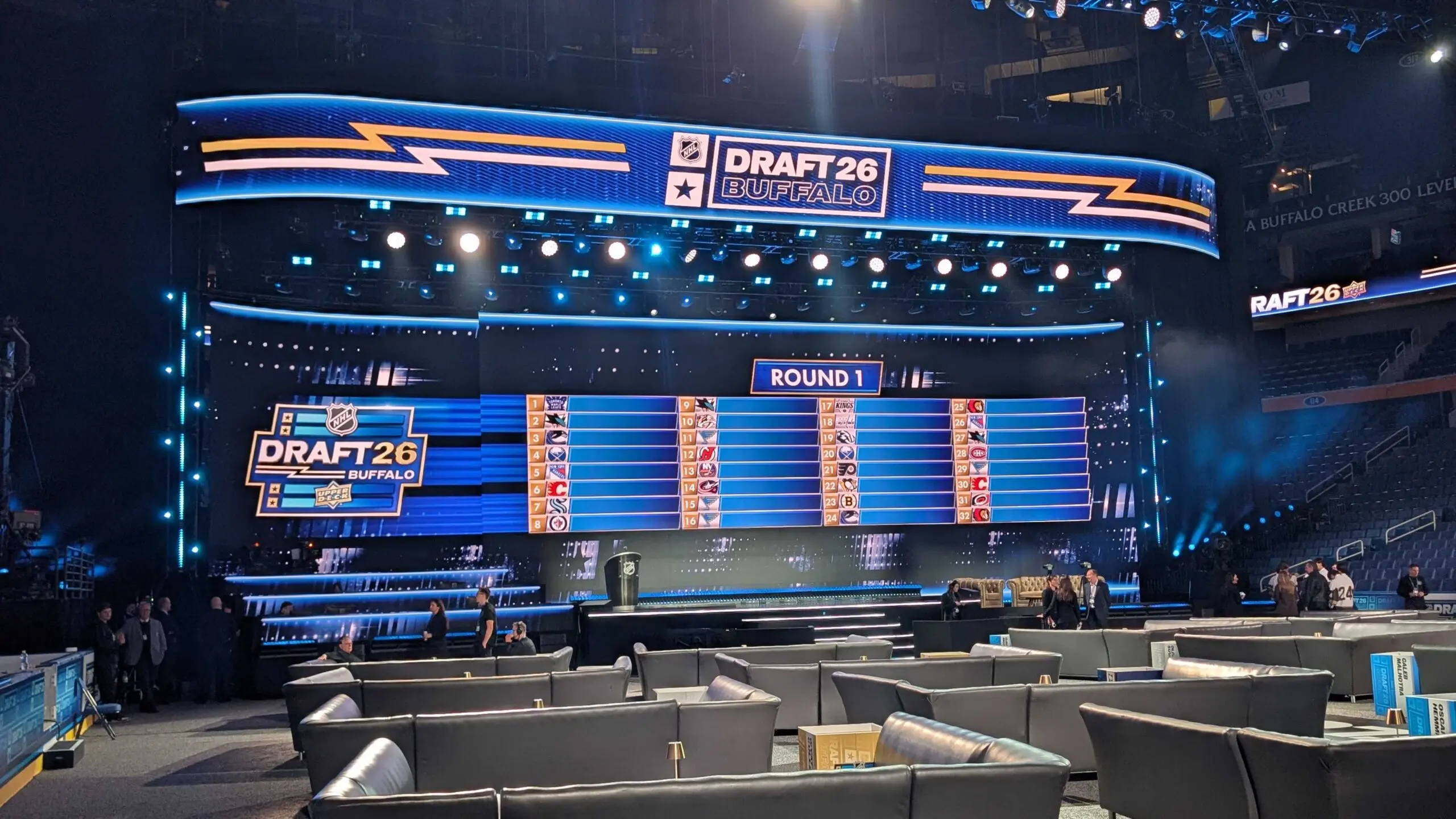
Photo credit: Steven Ellis/Daily Faceoff


When it comes to finding sustainable, long-term success, the NHL’s entry draft is crucial.
Over the years, NHL clubs have devoted tons of resources to finding an edge. Most recently, teams have been utilizing a combination of video, statistical models, and good old-fashioned on-the-ground scouting to prepare for the draft. Year over year, NHL teams like the Calgary Flames have done their best to improve their processes and find success.
Each draft class is always a little different, but the circumstances leading up to the 2026 NHL Draft were quite unique, with the NCAA’s decision to allow Canadian major junior players to begin play in 2025-26 throwing a gigantic curveball at NHL teams.
Has your team built an in-house statistical model? Well, adding the top players from the WHL, OHL and QMJHL to the NCAA has drastically changed the competitive balance in all of those circuits. Feel like you have a good handle on the eye test? Well, tell us know an 18-year-old that dominated the Western League last year should look as an 17-year-old college freshman.
The 2026 draft class itself was pretty weird, too. The top 10 picks included four Canadian junior players, a U.S. National Development Program product, two college freshmen imported from the WHL, and three teenagers playing in European men’s leagues. That’s a tough group to weigh against each other, even independent of all the changes.
Flames director of amateur scouting Tod Button was asked about the weirdness of the 2026 draft process and how the team is adjusting to the changing scouting environment a few weeks back after the draft concluded.
We haven’t figured it out yet. It was a hard year with that perspective, and again, I was talking to Pat [Steinberg, on Flames Talk] yesterday, and the word we used right from the start of the year was ‘perspective.’We had to have perspective, meaning the NCAA is bigger, stronger, older, mature. So guys going to play down there, it’s going to take them, they play less games. So you’re going to have to wait longer to have your evaluation, right? Like when Keaton Verhoeff goes to North Dakota… Like, he played 16 games where last year he played 28, I think, or whatever the number was. So you can’t make that decision or your evaluation. Sometimes the top players, you have your evaluation done in November. This is what they are. Then you sort them out versus the rest of them. When they’re going to college, and Keaton played the whole year as a 17-year-old, [Ilia] Morozov played the whole year as a 17-year-old. Oscar Hemming played the whole year as a 17-year-old. Tynan Lawrence went halfway through the year, right? So you have to give them time to get their head above water, get used to the pace, get used to the strength, right?And conversely, the CHL is a younger league now. So there wasn’t as many overagers. So when we talked to the analytics department, like, is there a way to weigh it differently because it’s a younger league now? It’s not as good. there’s not as many older players, and so we’re not quite there yet in how we’re going to analyze it at the end of the year, but at the end of the day, the top players still have a quick hand. You see it in tight, right? And are the numbers skewed? It’s one of our biggest challenges with analytics and amateur scouting. We don’t have player tracking in amateur scouting. We’re watching a kid play in the Swedish Hockey League in Frolunda, and you got a kid playing 20 games in Edina high school. Like, it doesn’t equal in the analytics department. You can’t say our rankings are the same. That’s the hardest part is taking the leagues, the ages, and trying to put that into one pie in analytics.So we’re working on it. We’re trying. I didn’t talk about it all the time, but it was a challenge this year, and I think it will level off after a couple of years, but that was a big challenge for us. Both looking at the CHL and being younger and knowing how hard it was going to be to play college hockey. The other thing about those kids, like college hockey players, you know those guys are going to be a target. You know, like Keaton Verhoeff, they’re going to challenge him. You’re going to, ‘oh, I’m going to take an extra run and I’m going to see what he’s made of.’ Cole Reschny is down there. He’ll tell you, it was hard at the start, but we knew, ‘just get your head above water, by the end of the year, you’ll be used to the pace and everything, how fast you have to do things,’ and he was. So it’s a good question, but it’s still ongoing.
With the 2026 draft in the rear-view mirror, preparations have begun for the 2027 NHL Draft, with the Hlinka Gretzky Cup tournament taking place in Edmonton and Red Deer in August.
This Article is a presentation of LeaseBusters

LeaseBusters is Canada’s premier lease takeover marketplace, helping drivers get out of their current vehicle leases without costly penalties or negative equity. Instead of paying thousands to break a lease, sellers connect with qualified buyers ready to take it over—saving money and avoiding financial stress. Buyers benefit from shorter-term commitments and often better monthly payments, while dealerships retain a replacement customer and leasing companies keep contracts active. It’s a smarter, more efficient solution for everyone involved. Four parties, four wins—only with LeaseBusters. For more information, check out www.LeaseBusters.com


Breaking News
- Flames Prospect Round-Up: Chase Harrington’s Spokane Chiefs remain undefeated
- NHL Notebook: Brad Marchand departs Panthers’ game with lower-body injury
- Flames roll with new forward lines following pair of AHL call-ups
- Flames call up forwards Aydar Suniev and Jonathan Castagna from the AHL’s Wranglers
- Wranglers winger Luke Philp reflects on return to Flames organization

Calgary FlamesTeam Cap Summary

Cap Summary
2026-27
2027-28
Projected Cap Hit
$89,682,142
$69,841,666
Projected Cap Space
$14,317,858
$43,658,334
Current Cap Space
$14,933,680
$43,658,334
Active Players
23/23
16/23
Draft Picks
Round
'27
'28
1
1
1
2
2
2
3
2
1