
FlamesNation has no direct affiliation to the Calgary Flames, Calgary Sports and Entertainment, NHL, or NHLPA
Can the Flames power play bounce back from a couple disappointing seasons?
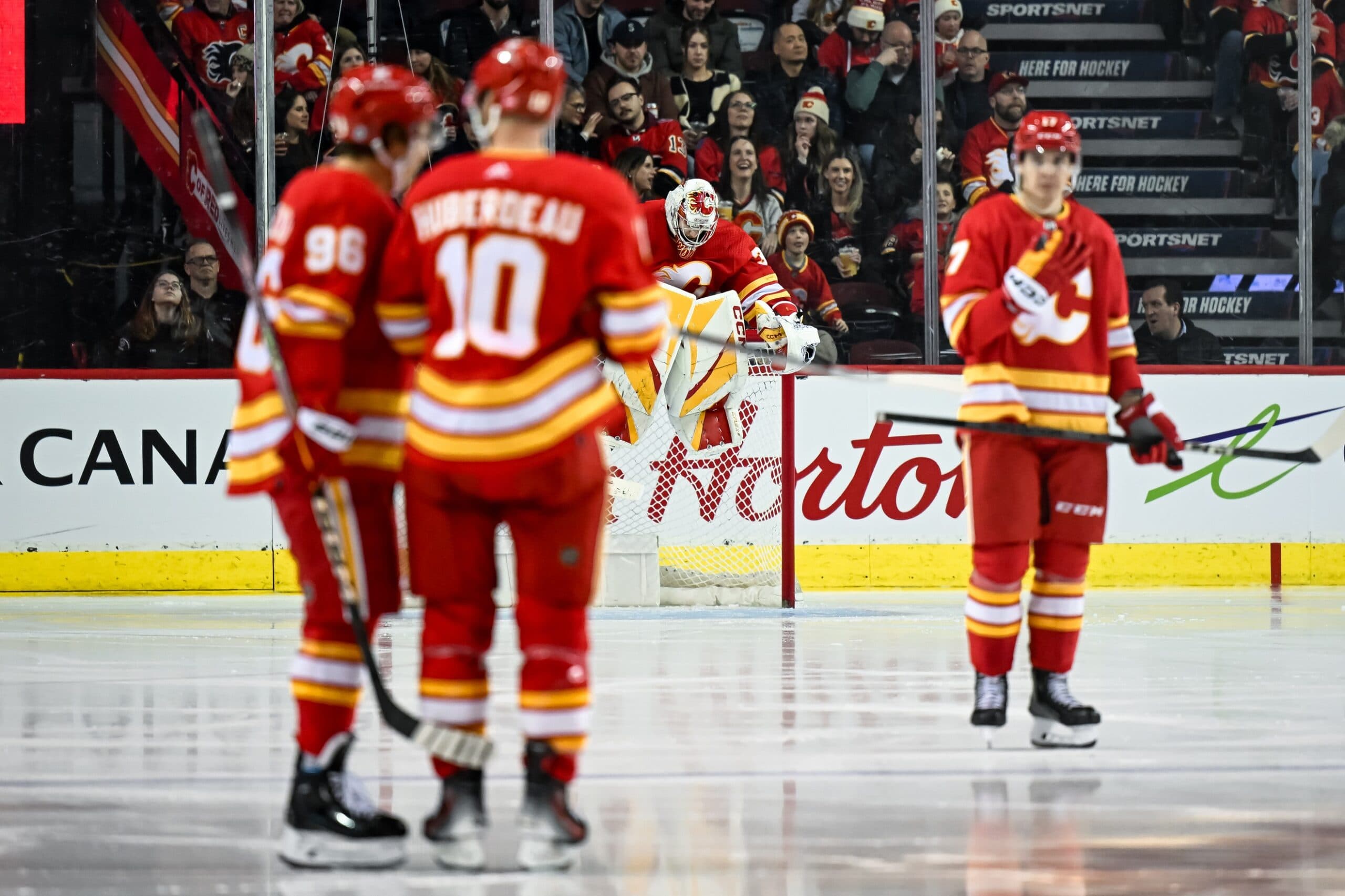
Photo credit: Brett Holmes-USA TODAY Sports


This article is brought to you by bet365.
In an ideal world, a hockey club’s power play units should be a source of strength and momentum. After all, your team gets to play in the offensive zone with one (or two) more players than the opposition. Even if you don’t score, your team should gain some energy from playing on the man advantage.
Over the past two seasons, the Calgary Flames’ power play units have been a difference-maker for the hockey club… but not consistently in a positive manner. In fact, on too many occasions the club’s special teams play has let the air out of the proverbial balloon and actually helped cost the team games.
With a new coach in charge of the PP and some new faces potentially involved, can the Flames turn things around on the PP in 2024-25?
Prospective units
Based on what we’ve seen in pre-season games and what’s been reported from practice sessions, here’s what we more or less expect to see to start the season:
The first unit will be MacKenzie Weegar, Jonathan Huberdeau, Yegor Sharangovich, Nazem Kadri and Andrei Kuzmenko. The second unit will probably be Rasmus Andersson, Mikael Backlund, Anthony Mantha, Blake Coleman and Connor Zary. Depending on whether these guys dress regularly and how games are unfolding, we could easily see Sam Honzek or Tyson Barrie sub in for Coleman.
The assistant coach responsible for the power play this season is Cail MacLean. Based on training camp, we wouldn’t expect anything terribly different stylistically from 2023-24, but we will note that we only really saw the full units in the final home game against Winnipeg so it’s hard to make sweeping determinations in that regard.
Past performance
Last season, the Flames’ top two power play units were in flux for much of the season give all of the departures – Noah Hanifin and Elias Lindholm, in particular, were PP fixtures before they went elsewhere. But here’s more or less how things tended to look:
The first unit was typically Weegar, Huberdeau, Sharangovich, Kadri and Elias Lindholm (who was swapped out for Kuzmenko after their trade). The second unit was much more fluid: Andersson, Backlund and Andrew Mangiapane were the general constants, with either Hanifin or Miromanov and one of Coleman, Zary or Matt Coronato. When the first unit wasn’t really clicking, the general tendency was for that unit to get more reps in order to get things going, so the second unit didn’t really tend to get consistent minutes until well into the season.
The assistant responsible for the PP last season was Marc Savard.
Over the past three years, the Flames’ power play has ranked fairly well relative to the rest of the league in terms of underlying performance. When you look at Natural Stat Trick’s expected goals for rates, the group ranked 12th in 2023-24, 14th in 2022-23 and 5th in 2021-22. The goal, at least during Darryl Sutter’s tenure, was for special teams units to be top 10, so from an underlyings perspective… they weren’t too far off.
What hurt the Flames was their execution: in terms of converting on PPs, they were 26th (17.9%) in 2023-24, 19th (19.8%) in 2022-23 and 10th (22.9%) in 2021-22.
Expectations for 2024-25
We’re all friends here, so it’s probably not a secret when we say the Flames may struggle to score goals this coming season. That’s not to say they lack offensive talent, but it’s probably unfair to swap out the guys the Flames did last season and expect the new guys, who are to a man less established than the guys they’re replacing, to score at the same rate.
The Flames will likely be a team that aims to keep games close at even strength and use their special teams units to be difference-makers. Last season, the power play under-performed to the point where head coach Ryan Huska openly noted it was hurting the team at times. He noted after the final pre-season game on Friday: “It was still a little bit broken at times, but it did have some chances to score.”
If nothing else, the goal for the PP should be to be a consistent source of momentum, even if they don’t score all the time. In terms of league-wide ranking and overall performance, aiming to be league-average (16th or 17th) and around a 20% conversion rate wouldn’t be the highest bar for the PP to clear given the talent levels of the players we’ll likely see involved.


Breaking News
- Mark Jankowski is a great reminder that development sometimes requires time and patience
- Less than 10 games into pro career, Jonathan Castagna is making a big impression
- Recap: Wranglers lose lead in the third period and drop game in Ontario
- What’s Going on in the Pacific Division: Golden Knights and Oilers are neck-and-neck for the division lead
- Flames roster news: Mikael Backlund out day-to-day with upper body injury

Calgary FlamesTeam Cap Summary

Cap Summary
2026-27
2027-28
Projected Cap Hit
$90,440,132
$69,841,666
Projected Cap Space
$13,559,868
$43,658,334
Current Cap Space
$15,205,864
$43,658,334
Active Players
23/23
16/23
Draft Picks
Round
'27
'28
1
1
1
2
2
2
3
2
1