
FlamesNation has no direct affiliation to the Calgary Flames, Calgary Sports and Entertainment, NHL, or NHLPA
Momentum And The Stanley Cup


Apr 4, 2009, 13:10 EDTUpdated: Oct 8, 2009, 01:37 EDT


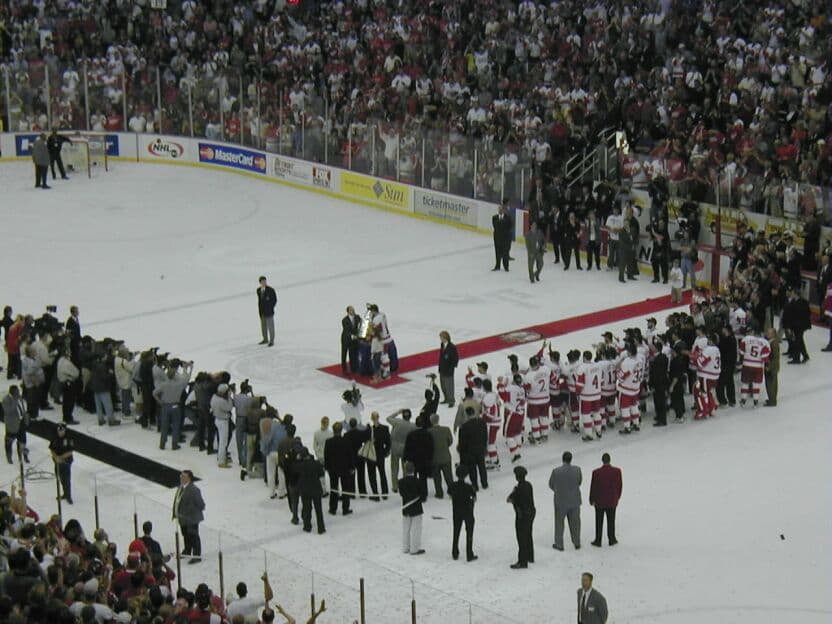
There’s an idea floating around out there that a team needs to be hot going into the playoffs. That idea is totally and completely wrong.
What I have here is a chart of the last ten Stanley Cup champions. Using Hockey-Reference.com, I went back and reviewed their respective records over the final ten games of the season. Than I calculated the winning percentage and compared it to their winning percentage on the season. The final column is the difference:
Team | WN% – Last 10 | WN%-Season | Difference1997-98 Red Wings | 60% | 54% | +6%2007-08 Red Wings| 70% | 66% | +4%1998-99 Stars | 60% | 62% | -2%2000-01 Avalanche | 60% | 63% | -3%1999-00 Devils | 50% | 55% | -5%2003-04 Lightning | 50% | 56% | -6%2006-07 Ducks | 50% | 59% | -9%2005-06 Hurricanes | 50% | 63% | -13%2002-03 Devils | 40% | 56% | -16%2001-02 Red Wings | 10% | 62% | -52%Average | 50% | 58% | -8%
Teams that go on to win the Stanley Cup are generally very good in the regular season; no team had a lower number than 54% over that span, and the average was 58% (48 wins on the season). However, over the final ten games of the season the average squad won only five of them, meaning that their winning percentage dropped an astonishing 8% on average over those final ten games.
Not to put too fine a point on it, but I think this shows rather definitively that expressions like “clicking at the right time” are in fact not based in reality – momentum entering the playoffs means absolutely nothing when it comes to winning the Stanley Cup.
Oh, and that picture above? That’s the presentation of the Stanley Cup in 2002; the Detroit Red Wings won it despite one win in their final ten games.


Breaking News
- Beyond the Boxscore: Former Devils contribute, but New Jersey’s stars take down Flames 5-3
- Hunter Brzustewicz gets a week of celebration in mini family reunion on and off the ice
- Instant Reaction: Flames weather storm in New Jersey, but drop a close game
- Flashback Friday: Looking at the two trades with the Devils which has helped the Flames’ rebuild
- Which Flames are on track to earn performance bonuses in 2026-27?

Calgary FlamesTeam Cap Summary

Cap Summary
2026-27
2027-28
Projected Cap Hit
$90,665,120
$68,932,500
Projected Cap Space
$13,334,880
$44,567,500
Current Cap Space
$19,162,716
$44,567,500
Active Players
23/23
15/23
Draft Picks
Round
'27
'28
1
1
1
2
2
2
3
2
1