
FlamesNation has no direct affiliation to the Calgary Flames, Calgary Sports and Entertainment, NHL, or NHLPA
The Flames’ power play came up empty, but special teams still made a difference against Nashville
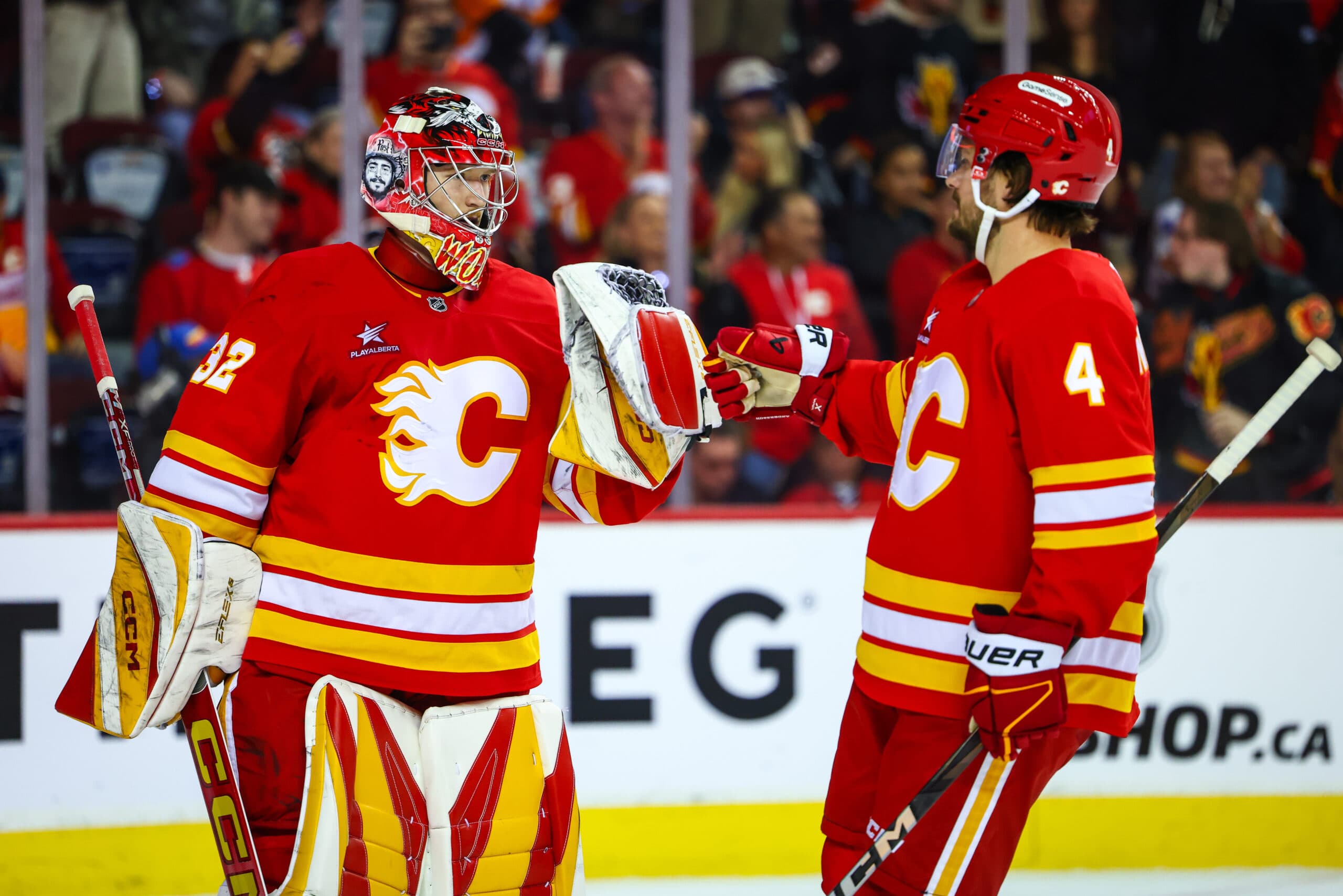
Photo credit: © Sergei Belski-Imagn Images


For the better part of two periods, the Calgary Flames couldn’t solve Nashville Predators netminder Juuse Saros. They had their looks, sure, but Saros stood tall and the Flames kept trying to get a puck past him.
At 16:14 of the second period, an opportunity presented itself after forward Matt Coronato drew a holding penalty driving to the Nashville net. On the ensuing face-off in the Predators’ zone, Jeremy Lauzon inadvertently sent the puck sailing over the glass, earning himself a two minute minor for delay of game and giving the Flames 1:56 of a two-man advantage.
For a power play that had entered the game ranked near the bottom of the NHL’s rankings, the five-on-three must have looked like water to someone dying of thirst – a respite from everything that had ailed them, and an opportunity to take hold of the game.
Here’s what the official scorer credited the Flames with on their five-on-three:
- One shot on goal.
- Three blocked shots – two by Nashville defenders, one by a Flames teammate.
- One missed shot.
- Two giveaways.
- Zero goals.
When asked following the game what didn’t work on the five-on-three advantage, Flames head coach Ryan Huska was pretty succinct: “Everything.”
To their credit, the Flames managed to regroup during the intermission and win the game in the third period – both Huska and alternate captain MacKenzie Weegar credited their group for responding positively.
Asked how the group can fix the power play, Huska offered a little more.
“It’s going to come,” said Huska. “Right now they’re really struggling and they all want to do well and sometimes everybody talks with squeezing a stick a little too tight or trying things. It’s just simply playing the game. And when they start feeling better about their ability offensively, oftentimes it starts with five-on-five play for them and then it carries over to the power play. But they’ll get it going eventually. We need them to. We talked lots about our team. We need special teams to be the difference for us. Power play was not tonight, but our penalty kill was. We had one in the third period that we needed to get done and I thought we did an excellent job with that. So finding a way to get them both contributing will be important for us.”
The penalty kill Huska referenced was midway through the third period, with Brayden Pachal in the box for holding. The Predators were limited to just two shots on net, both stopped by Dustin Wolf, and the Flames managed to hold on for a 2-0 victory.
Over the past 10 games, the Flames’ special teams have been, well, not great. Their power play has gone 2-for-25 – an 8% success rate – and allowed a shorthanded goal, too. Their penalty kill has allowed six goals in 25 opposition power plays, killing off 76% of their advantages. Collectively, the Flames’ special teams units have been out-scored by their opponents 7-2 over the past 10 games. The Flames only managed a .500 record (4-4-2) in that span on the basis of some capable even-strength play (being narrowly out-scored 19-18) and some superb goaltending.
Timely goals and big saves in key situations have bailed the Flames out when their power play hasn’t been able to. But that won’t last forever, and the Flames need to have their play with a man advantage actually seem like an advantage if they want to continue hanging around in the playoff picture.
The Flames are back in action on Tuesday night when they host the New York Islanders.


Breaking News
- Flames roster news: Mikael Backlund and Jonathan Huberdeau skated with team on Saturday
- Flames Game Day 10: A visit from the Red Wings (8pm MT, SNW)
- The Flames’ 2004 green hard hat returns as a fan giveaway on Saturday
- Series Preview: Wranglers wrap up road trip in second series against Canucks
- Notes from last game: Devin Cooley plays out of his mind again in Flames’ 2-1 victory over Wild

Calgary FlamesTeam Cap Summary

Cap Summary
2026-27
2027-28
Projected Cap Hit
$90,440,132
$69,841,666
Projected Cap Space
$13,559,868
$43,658,334
Current Cap Space
$15,474,202
$43,658,334
Active Players
23/23
16/23
Draft Picks
Round
'27
'28
1
1
1
2
2
2
3
2
1