
FlamesNation has no direct affiliation to the Calgary Flames, Calgary Sports and Entertainment, NHL, or NHLPA
How the Calgary Hitmen have navigated the impacts of the NCAA’s rule changes
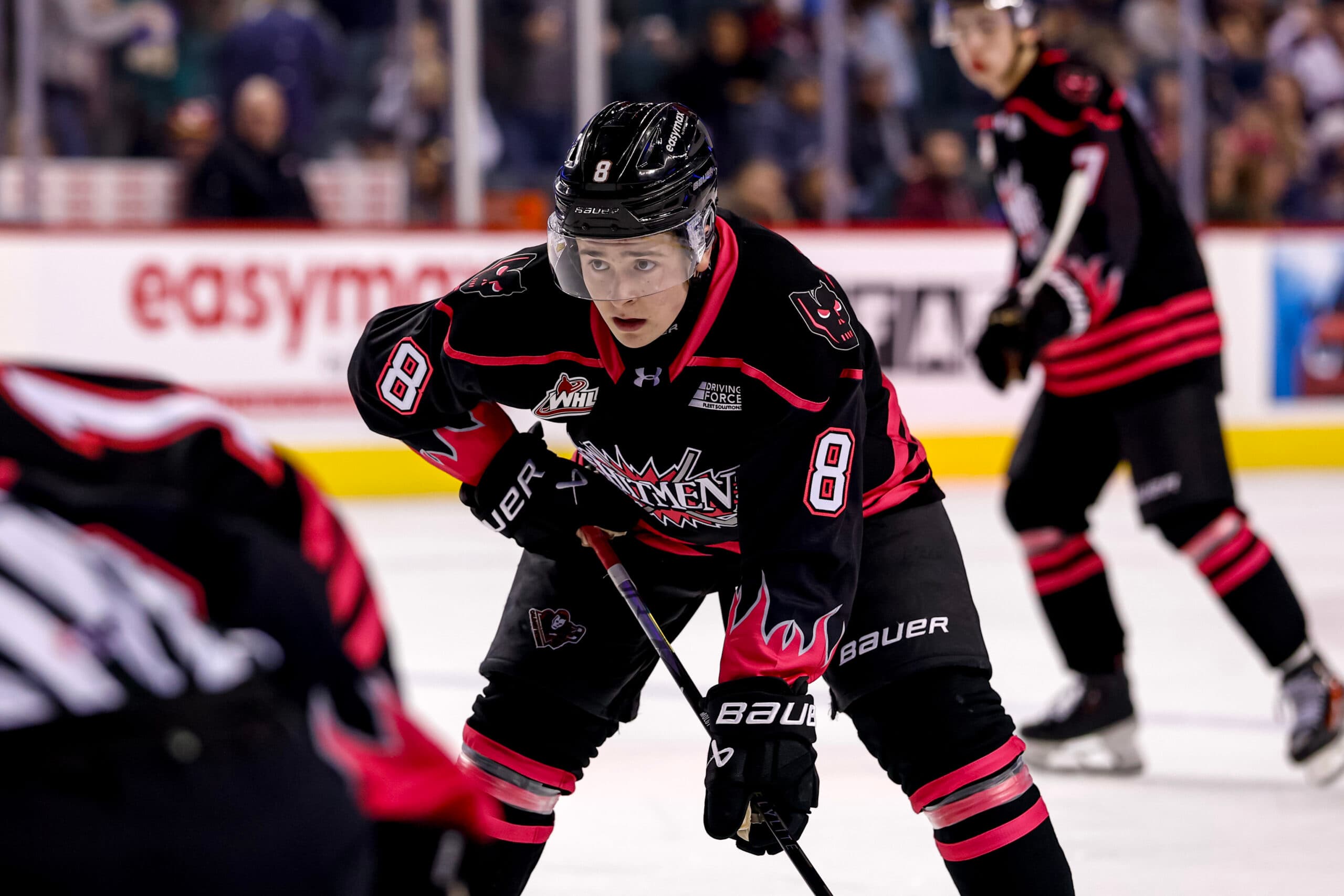
Photo credit: Jenn Pierce/Calgary Hitmen


It’s been a really interesting few years in hockey’s developmental pipeline.
In the olden days, the choice for young players was one of two paths: Canadian major junior or American college. One or the other. If you committed to go to college, you could not play in the Canadian Hockey League. If you played in Canadian major junior, you weren’t eligible to play in the NCAA.
Two distinct pathways, within virtually zero crossover.
The CHL system became termed a “19-year-old league,” with clubs recruiting players at 16, then having them gain experience and really become impactful players in their 18 and, primarily, 19-year-old seasons. The ones that were drafted by NHL clubs would then move onto pro hockey at 20. The ones that weren’t drafted often stayed as overagers for their 20-year-old seasons, and typically the WHL’s scoring leaderboard was dominated by players in their 19 and 20-year-old seasons.
The NCAA system was a bit of a mirror of the CHL’s, but primarily used the United States and North American junior hockey leagues as feeders, typically having players join as freshman as 18, 19 or 20-year-olds.
These two disconnected ecosystems were thrown for a loop – and suddenly linked together – when the NCAA opted to revise their eligibility rules, with 2025-26 being the first hockey season where previously-ineligible CHL players could move to college freely. There’s no better illustration of just how much change CHL teams experienced over the last little while than the local Calgary Hitmen, who played two rounds of playoffs in both 2025 and 2026. Here’s the rough age distribution of the players that suited up for them in each year’s playoffs.
Age | 2025 playoffs (24) | 2026 playoffs (22) |
20 | 3 | 3 |
19 | 10 | 1 |
18 | 5 | 6 |
17 | 4 | 10 |
16 | 2 | 3 |
Just six players played for the Hitmen in both season’s playoffs, representing a huge amount of year-to-year turnover for such a successful team. (Four of those six players are slated to return to the Hitmen for the 2026-27 season.)
To get a bit of insight into the changing landscape, we caught up with the brand-new general manager of the Hitmen, Cass Bruni, during training camp at the Scotiabank Saddledome at the end of August. A local product, Bruni spent time with the Hitmen as a video coach and Alberta scout before becoming assistant general manager under Garry Davidson in May 2024. After just over two seasons apprenticing under Davidson, he moved to the general manager’s chair in June.
“It’s an honour, I’m really excited,” said Bruni. “I’ve been with the organization for 11 years now, three in a full-time capacity now, but it’s an honour and it’s really exciting to see the group of players that our scouts and coaches that put together. It’s awesome. But as you said, it is different. I think it’s the change that we’re embracing. I think we have kids from eight different states in the U.S., all four [Western] provinces, four different countries. So we’re embracing the change, and we’re just trying to find players wherever they’re coming from.”
The Hitmen have dealt with a lot of changes over the past two seasons, between players aging out of major junior, NHL-drafted players graduating to the professional ranks, and the new NCAA rules fuelling migration to the college ranks, too. Through the first year, it seems like they’ve embraced the challenge of navigating the new environment.
“I think we’ve done well,” said Bruni. “I think the last two seasons we finished third and seventh overall, respectively, in the regular season. And as you said, last year we had the youngest team in the Western League. I think we’re embracing being just the new landscape. And, yeah, I think the standards in Calgary are high. I think Calgary is the best hockey market in the world, so being a major junior team in this market, there should be some inherent pressure in having a really good program. So I would say our standards every season are to be competitive and put out a good product that our community is really proud of. I grew up in the city, I love the city, I grew up 10 minutes away from this rink, watching the Flames and Hitmen growing up, so I know how important it is to the community.”
The big question: how do the NCAA’s changes impact how major junior clubs build their teams?
“Well, we’re embracing it. I would say the rule change is a huge benefit to the players because they have optionality to play in our league and then go play college in the U.S. I think that’s one to start, having the optionality to play wherever you want and not be restricted, it’s only going to benefit the players. But I think it’s benefited us as a program, and I think it will as a league overall in the end. I think it’s going to take some time to meet and revert and see how it all shakes out. But our player pool has expanded vastly. In terms of the amount of American players coming up that we would have not been exposed to, especially those out of Minnesota. There’s buzz about the CHL and the Western League in Minnesota, and we’re educating those families on coming up. And I would say in how we navigate it, I think our league is going to get generally a little bit younger. But saying that, I think the talent pool for the draft-eligible players, those high-end players, are all going to come to our league just because I believe in our program, our programs as a whole, that we’re the best place to play for draft-eligible players. So I think that’s really exciting. The demographic’s going to change. There’s players that are going to be leaving early, but also I just think the amount of players coming in is huge. And the way we’re going to attack it is we’re going to bring in players every year. We’re going to find players wherever they are, and we’re going to bring them in at 16, 17, and 18, whatever it might be, and we’ll keep just putting in competitive teams every single year. That’s our goal.”
As we get into the second season of the new NCAA rules, in addition to the usual CHL roster churn, the Hitmen have been dealing with the departures of players headed to college this season (most notably Ben Macbeath to Denver), several players that are committed for future seasons (including Julien Maze with Quinnipiac and Andrei Molgachev with UConn) and the try-out for a player like UMass Lowell commit Charlie Kresl, who’s the only 20-year-old in Hitmen camp. Given how quickly things can change with college commitments, and the ripple effects on junior teams like the Hitmen, building flexibility and adaptability into their roster seems to be an approach that makes sense.
“Yeah, absolutely, I think the way you do that is you have depth in your list, depth at every single position so that you can be able to manage those changes,” said Bruni. “Because you’re not going to know what’s going to happen. And it’s a catch-22 because if you develop a player to the point where he’s going to the next level of pro or college or whatever it might be, he’s going to be really good for you, but he might be leaving before you actually would want him to leave. But saying that, if you have depth in your list, you find players every single season, you can be nimble. You can be nimble in being able to adjust and manage those changes that you might not expect. But I think, one, you have to adapt. You have to understand the landscape’s different. There’s a lot of different programs that I’ve had to deal with for years in different sports. If you think about even college basketball, for example, they’ve had one-and-dones and two-and-dones for a long time. So it’s a different landscape. You’re going to have players that maybe come in for one year, two years, versus the traditional four or five years. But we’re willing to adapt and manage it.”
The Hitmen begin their pre-season on Friday night against the Red Deer Rebels. They kick off the regular season on Sept. 18 at the Saddledome against Red Deer.
The Future is Daily Faceoff Calgary

The future of hockey coverage is bigger than one team, one market, or one platform. By bringing our local hockey brands together under Daily Faceoff, we’re creating a more complete hockey experience — one that gives fans the best of local passion and league-wide expertise, all in one place. The community remains at the centre. The experience is simply expanding as part of the next evolution of how we cover the game.
Welcome to Daily Faceoff Calgary – Driven by hockey.


Breaking News
- Instant Reaction: Flames finally get two points after rematch with the Ducks
- NHL Notebook: Penguins and Sabres make small trade
- What’s Going on in the Pacific Division: There are no surprises two weeks into the season
- Notes from last game: Aydar Suniev scores first NHL goal, Zayne Parekh struggles
- Flames Game Day 6: A rematch in Orange County (7:45pm MT, SNW)

Calgary FlamesTeam Cap Summary

Cap Summary
2026-27
2027-28
Projected Cap Hit
$89,682,143
$69,841,666
Projected Cap Space
$14,317,857
$43,658,334
Current Cap Space
$15,431,468
$43,658,334
Active Players
23/23
16/23
Draft Picks
Round
'27
'28
1
1
1
2
2
2
3
2
1