
FlamesNation has no direct affiliation to the Calgary Flames, Calgary Sports and Entertainment, NHL, or NHLPA
Flames assistant general manager Brad Pascall discusses the Wranglers off-season of change
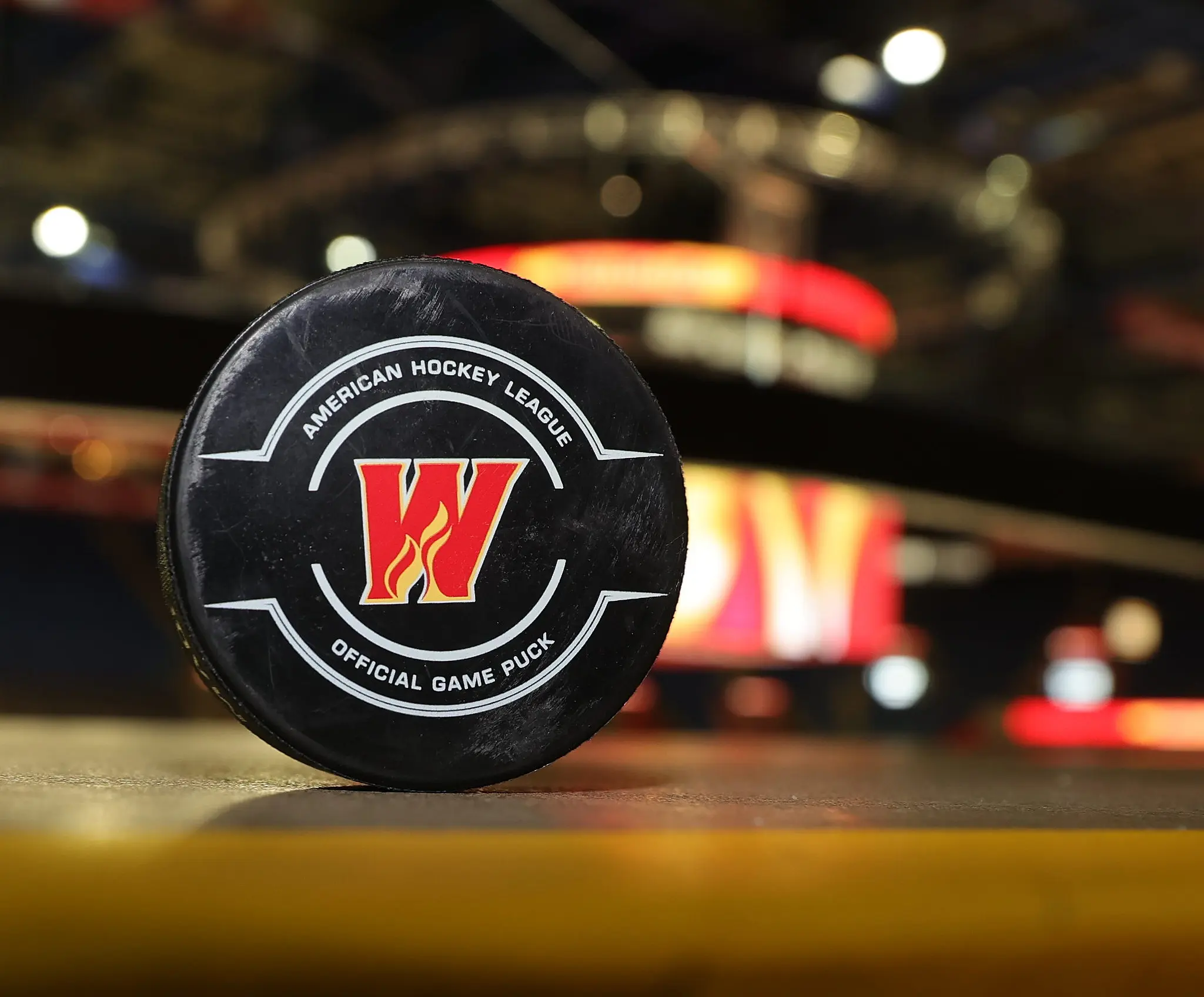
Photo credit: David Moll/Calgary Wranglers


Since they arrived in town back in 2022, the Calgary Wranglers have had a great deal of success.
In each of their first three seasons, the Wranglers qualified for the Calder Cup playoffs – and they won playoff rounds in their first two seasons. Heck, when you factor in their final season in Stockton, the Flames’ top affiliate had a really nice run.
Well, that run ended in 2o25-26, when the Wranglers had a tough season and finished near the bottom of the American Hockey League’s standings.
That challenging year was followed by an off-season of changes, with the Wranglers adding a new assistant coach (long-time Soo Greyhounds bench boss John Dean) and turning over their roster in a pretty significant way.
To learn more about the Wranglers’ summer of change, we caught up with Flames assistant general manager and vice-president of hockey operations Brad Pascall, who oversees the Wranglers and the Flames’ development apparatus, during prospects training camp.
[Questions and answers lighted edited for clarity.]
DFO: It goes without saying, you guys didn’t have the year you wanted last year for the Wranglers. But it kind of felt like you made a lot of intentional changes. Like the guys in sort of the AHL deals, it seems like it feels from the outside that there’s a lot of thought going into who the types of people, the roles, the age group, those kind of things. So I’m just curious if you can sort of walk me through what you are trying to do with the group this year.
BP: Just a quick look at last year. Yeah absolutely, I think starting out the season when you lose [Solovyov] on waivers and then the organization did its job by promoting Kuznetsov and [Brzustewicz]. So no matter what team you’re on, if you lose three of your top four D in the first number of weeks or first month of the season, it’s hard to replace. But in saying that, if you look at our season as a whole, what is the American League team about? It’s about development, moving guys along, but I believe that we had 16 players that played in both the NHL and the AHL team, which I believe was top two in the league. So I think if you take a step back and say, hey, wins and losses, but giving players the opportunity, they deserve the opportunity, getting an opportunity, I think that was something we reflect on in a positive way of what the American League is all about.
And then looking into, I guess, the off-season, And I think we had some players that had been here for a few years. We just thought that, you know, change, you know, I think we changed out three of our staff. We changed out a number of players. And I think that’s a product of the pro game. And something I think that I thought was going to be a good positive thing. For the thought process, you go into it, you’re always going to have holes to fill. So you do a depth chart and you say, okay, who do you think is going to be in the NHL? Who’s going to be in the American League to start? And hopefully they move up and either play 84 games or play eight games. And when we looked at that with our pro scouts and our management group, you know, you identify holes and then you start looking at partners, you know. So we have, you know, a couple of first-year defencemen, and it’s like, hey, who’s a good veteran presence to play with these guys, but at the same time could still be depth players for the organization. And, you know, so we went out and signed some of those guys. And even looking at forwards, the same thing. You know, guys on America League deals like Luke Philp, for instance, who we’ve had in the past and we know him and he’s excited to be back. We thought he was a really good culture guy that can play up and down the lineup, all three forward positions.
And then just complimenting some of the new players coming in, Castagna, Gross, and others that it’s just, hey, how do we take the next step with Suniev and Stromgren and these guys of surrounding them with good players? Ben Jones, since he’s left here, I think he’s played almost 50 games in the NHL and supported on top of a number of days on roster, right? So these are depth players for the organization. If they make the team out of camp, great. But if not, they can still be depth players, but then be really good American League players as well.
DFO: Just from the outside, it felt like every time we read a release from the organization saying ‘we’ve signed so-and-so,’ we look at them, ‘okay, two-way deal. Oh, he’s played in the NHL.’ It seems like even the AHL guys, the guys in the AHL/ECHL two-way deals, you’re like, ‘okay, this guy’s kind of interesting.’ There’s really good players who will be playing in Rapid City because of how competitive the environment is for roster spots for the Wranglers. And I would say the same thing for the Flames, where you look at the Flames roster on paper, there’s at least a half dozen guys that probably will deserve to be in the NHL who will be just chomping at the bit. Do you feel like as much as you never want to have a situation where guys feel like there’s no room to move up, but you also kind of want to have a situation where guys feel like, ‘okay, we’re going to battle for spots.’ It seems like there’s a nice balancing act going on.
BP: Yeah, no, and I appreciate that. And you’re right. I think that, you know, the Calgary Flames organizationally where we are, there’s lots of opportunity. And they’ll continue to be that. And I think that’s why it’s an attractive place in the summertime to sign players that are perhaps depth players that think they can make the team out of camp, and they might. Or if not, they know that they’ll have an opportunity.
And I think that’s what we sell. But you’re right, even if it’s American/ECHL contracts, that the anticipated player movement within the organization is attractive to a lot of people. And we feel that we, through our scouting staff, identified some good quality players, good quality people that will get an opportunity to play games, whether it’s in the NHL, ECHL, or AHL, and be ready for that next step. And I think that’s the organizational goal. I mean, ultimately, to say we only care about the Flames, but the Flames is the number one priority in anything we do, day and night, 24/7. But you always have to have organizational depth to operate teams and be ready and to fill holes and have guys always pushing.
The Wranglers begin their 2026-27 season on Oct. 2 when they host the Abbotsford Canucks.
The Future is Daily Faceoff Calgary

The future of hockey coverage is bigger than one team, one market, or one platform. By bringing our local hockey brands together under Daily Faceoff, we’re creating a more complete hockey experience — one that gives fans the best of local passion and league-wide expertise, all in one place. The community remains at the centre. The experience is simply expanding as part of the next evolution of how we cover the game.
Welcome to Daily Faceoff Calgary – Driven by hockey.


Breaking News
- Flames roster news: Ben Jones assigned to the AHL’s Calgary Wranglers
- Offensively-challenged to start the season, Flames showed poise, confidence and swagger against Toronto
- Beyond the Boxscore: Matvei Gridin snipes two as Flames take down visiting Leafs
- Instant Reaction: Leafs wilt in final Saddledome visit, Flames run streak to four wins
- What’s Going on in the Pacific Division: Flames are the hottest team in the division

Calgary FlamesTeam Cap Summary

Cap Summary
2026-27
2027-28
Projected Cap Hit
$90,440,132
$69,841,666
Projected Cap Space
$13,559,868
$43,658,334
Current Cap Space
$15,752,182
$43,658,334
Active Players
23/23
16/23
Draft Picks
Round
'27
'28
1
1
1
2
2
2
3
2
1