
FlamesNation has no direct affiliation to the Calgary Flames, Calgary Sports and Entertainment, NHL, or NHLPA
Throwback Tuesday: Looking at the penalty-filled series between the Flames and Ducks in 2006
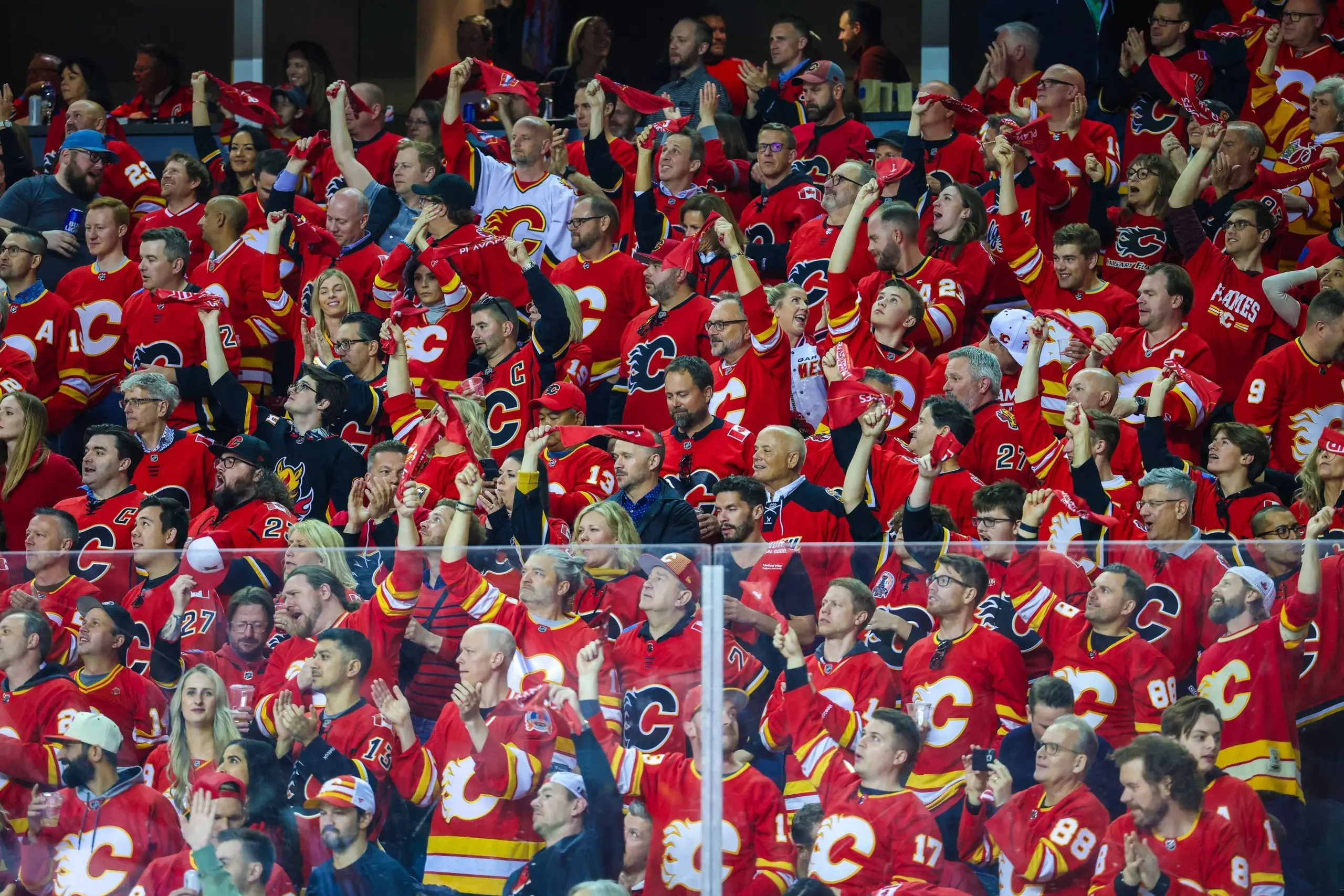
Photo credit: Sergei Belski-USA TODAY Sports

Jan 7, 2025, 18:00 ESTUpdated: Jan 7, 2025, 15:33 EST


For the first time this season, the Calgary Flames and the Anaheim Ducks meet up.
The Ducks have been on a bit of a roll lately, going 4-1-0 in their last five games against rather tough teams, splitting the two games against the Oilers, but defeating the New Jersey Devils, the Winnipeg Jets, and the Tampa Bay Lightning.
Still, the Ducks probably won’t make the post-season, as they have a 17-18-4 record with 38 points, five behind the Flames and seven behind the Vancouver Canucks, who hold on to the final wild card spot.
It wasn’t always like this though, as the Ducks were once a consistent post-season team, making two Stanley Cup Finals and a handful of conference finals during their contention period from the 2002-03 season until the 2017-18 season.
In that span, the Ducks have played the Flames in the post-season three separate times, winning all three series the teams have met in. Most recently, the Ducks swept the Flames in the 2017 season, before defeating the Oilers in a seven-game series before crashing out to the Nashville Predators. Two seasons before that in the 2015 post-season, the Ducks won in five games.
However, the series that we’ll look at in this Throwback Tuesday is the 2006 series. Last post-season during the Oilers’ Stanley Cup Finals run, I wrote an article for OilersNation about the Oilers’ penalty kill and how they killed off 34 consecutive penalties (at the time, it was at 28 straight kills). Ironically, the Ducks also killed off 34 straight penalties in the 2006 post-season, the largest streak I could find in post-season history.
It’s odd though, considering how many penalties the Ducks and Flames took in the seven-game, round one series in 2006. Let’s take a look at that wild series.
The Flames/Ducks 2006 series
Game 1 was a low-scoring affair. The Flames’ Tony Amonte scored six minutes and 17 seconds into the second period, before the Ducks’ Jeff Friesen tied it five minutes and 17 seconds into the third period. In overtime, Darren McCarty scored the game-winner as he found himself in the slot and blasted it past the Ducks’ netminder.
Each team had five power play opportunities in this game, with 15 penalty minutes apiece thanks to a fight between Jamie Lundmark and Joffrey Lupul.
Game 2 saw the Ducks rebound thanks to goals from Chris Kunitz, Scott Niedermayer, and Joffrey Lupul, the Mighty Ducks of Anaheim took a 3-0 lead early in the second period. However, Jarome Iginla and Kristian Huselius scored before the end of the second period to make a game out of it. Samuel Pahlsson scored the game-winner for the Ducks in the third period, but Dion Phaneuf once again made them sweat with a goal with just under five minutes left in the game, with the Ducks taking this one 4-3.
The score of the game itself was normal, as the Ducks took a big lead, bent but didn’t break, and the Flames’ comeback attempts fell short. However, the Ducks had six power play opportunities, a lot in their own right, while the Flames had 12 power play opportunities, scoring twice on those attempts.
Game 3 saw the series shift to Anaheim. Daymond Langkow scored with just under six minutes left in the first period on the power play, before Francois Beauchemin scored before the end of the first. In the second, Huselius scored his second of the series, followed by Beauchemin’s second of the game. It was all the Flames from there on out though, as Chuck Kobasew scored the game-winner in the second period, followed up with goals from Darren McCarty and Robyn Regehr in the third period.
Nowadays, when a team has seven power plays, you think to yourself “wow, that’s far too much and refs need to put away their whistle”. It impacted the game no doubt, as the Flames were 3-for-7 on their power plays. However, the Ducks themselves had nine power play attempts, scoring two goals.
The Ducks were against the ropes in Game 4, and they came out firing as Ryan Getzlaf and Teemu Selanne scored in the first period to give the Ducks a 2-0 lead heading into the first intermission. As the Flames have done throughout their franchise history though, they fought back, as captain Jarome Iginla scored twice early in the second. No goals were scored in the third period, sending this game to overtime where Sean O’Donnell scored just over 90 seconds into the extra frame to knot the series up at two.
Once again, the teams took copious amounts of penalties in this game. The Flames had six power play opportunities, failing to score on any of them, while the Ducks had seven power play opportunities, with Selanne’s goal the only power play goal in this game.
The series shifted back to Calgary for what was now a best of three. Just under six minutes into the game, Tony Amonte scored a short-handed goal to give the Flames a 1-0 lead, before Iginla scored his fourth of the postseason with just under four to go in the first period. He followed that up with his fifth of the postseason early in the second period. Andy McDonald and Rob Niedermayer each scored power play goals in the third for the Ducks, but the Flames were able to hold on for the 3-2 win.
In total, there were 10 power play opportunities in this game, with a handful of fights and 48 penalty minutes between the two teams. The Ducks capitalized on two of their six power play opportunities, while the Flames scored once on their four opportunities. It was the last time the Flames scored a power play goal in this series.
Game 6 was another close game, despite the referees best attempts. The Flames took a 1-0 lead halfway through the first period thanks to Stephan Yelle’s first goal of the postseason. However, Selanne scored seven minutes and 49 seconds into the second period. Niedermayer’s power play goal with just over five minutes left in the game set up the do-or-die Game 7 back in Calgary.
Once again, the two teams were in the box for a while. The Flames had 27 penalty minutes, with the Ducks receiving nine power plays in this game Shortly after Shean Donovan’s holding call, the Ducks found the game-winning goal. With that being said, the Flames had their chances as well, as they had five opportunities on the man advantage.
Of the seven games in the series, only two didn’t finish in a one-goal game. The Flames took Game 3 by a score of 5-2, while the Ducks took Game 7 by a score of 3-0. Selanne scored his third of the postseason about five minutes into the second period, while Ruslan Salei scored in the final minute of the middle frame. Friesen scored in the empty net with 20 seconds left in the game to ice the series.
This game was an anomaly, as there were only six power plays in this game for both teams. The Flames had four opportunities, while the Ducks only had two. Neither team was able to score on the man advantage, as the Flames went quietly into the night.
In total, the Flames had 43 power play opportunities while the Ducks had 44 man advantages. The Flames spent 129 minutes in the box, with the Ducks spending 125 minutes in the sin bin. This series may not have the most penalty minutes in one series, that came in the 1988 postseason, but the Flames and Ducks combined for 254 penalty minutes in a seven-game series that featured just four fights. It was a wild series, one of the best in Flames history. It’s just sad they couldn’t find a way to win.
Thanks for reading! You can follow me on Bluesky @ryleydelaney.bsky.social.


Breaking News
- Darryl Sutter reflects on his career, his son becoming a coach, and The Code of The West
- Beyond the Boxscore: Flames give start to finish quality performance in first victory of season
- Series preview: Wranglers kick off six game road trip with stop in San Jose
- Instant Reaction: Flames finally get two points after rematch with the Ducks
- NHL Notebook: Penguins and Sabres make small trade

Calgary FlamesTeam Cap Summary

Cap Summary
2026-27
2027-28
Projected Cap Hit
$89,682,143
$69,841,666
Projected Cap Space
$14,317,857
$43,658,334
Current Cap Space
$15,431,468
$43,658,334
Active Players
23/23
16/23
Draft Picks
Round
'27
'28
1
1
1
2
2
2
3
2
1