
FlamesNation has no direct affiliation to the Calgary Flames, Calgary Sports and Entertainment, NHL, or NHLPA
What new potential lines and pairings could the Flames use in 2026-27?
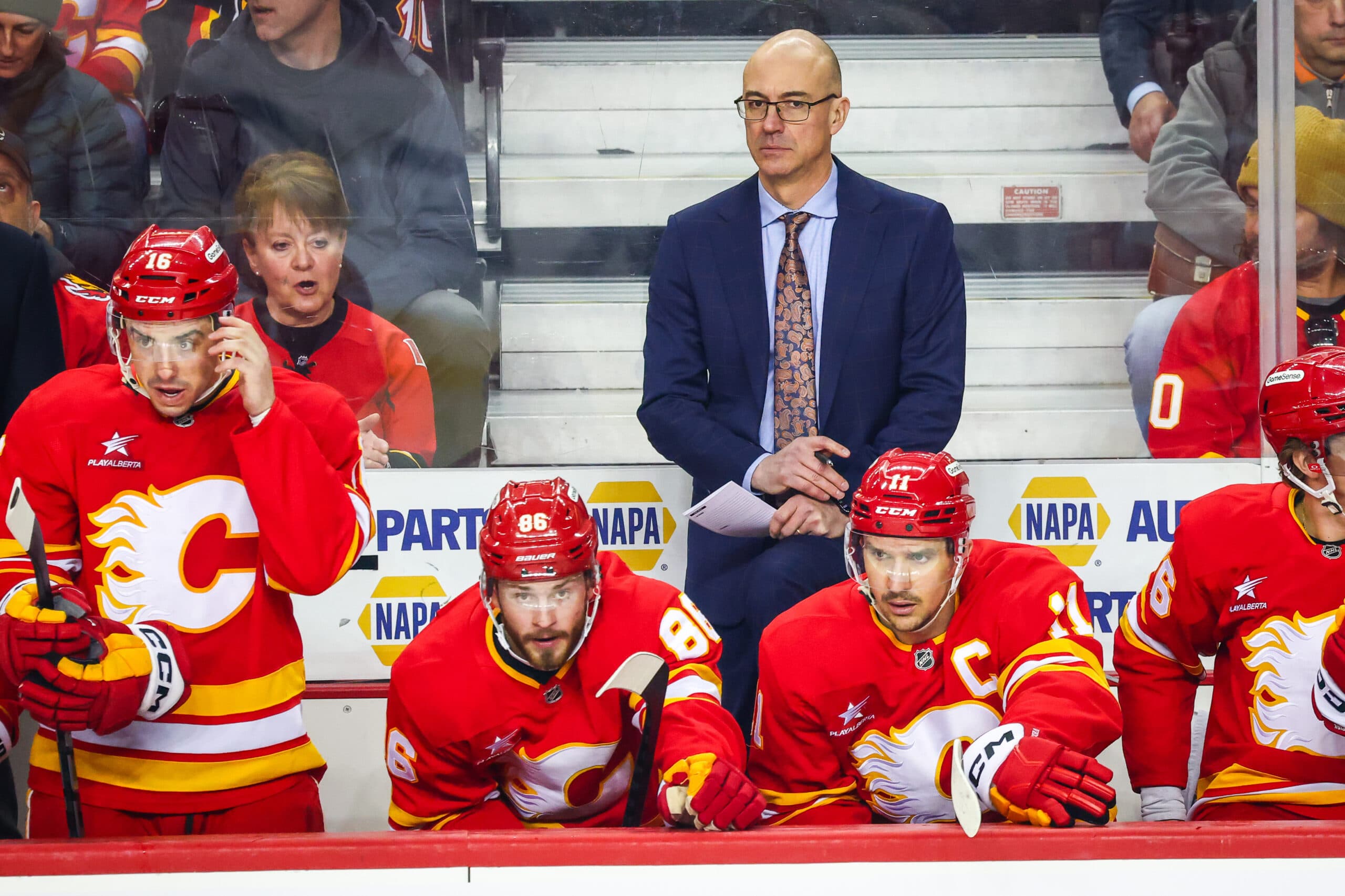
Photo credit: © Sergei Belski-Imagn Images

Jul 26, 2026, 10:00 EDTUpdated: Jul 26, 2026, 01:25 EDT


With the recent 2026 NHL Draft and some blockbuster trades made by the Calgary Flames, next season is bound to look a little different than we have seen before. With a whole new team comes new line combinations. Let’s look into some combinations that Flames head coach Ryan Huska should try out next season.
First, these were the most common combinations we saw from the team late in the 2025-26 season.
Forwards:
- Line 1: Blake Coleman (traded) – Mikael Backlund – Joel Farabee
- Line 2: Matvei Gridin – Morgan Frost – Matt Coronato
- Line 3: Yegor Sharangovich – Ryan Strome – Connor Zary
- Line 4: Ryan Lomberg (signed with Columbus) – Martin Pospisil – Adam Klapka
Defence:
- Pair 1: Kevin Bahl – Zach Whitecloud
- Pair 2: Olli Määttä (traded) – Hunter Brzustewicz
- Pair 3: Joel Hanley – Zayne Parekh
Not only are a number of these players no longer on the team, but with a roster full of new, young talent, change can be incredibly beneficial. Here are some combinations that might add new strengths to the team, featuring a mix of established NHL players and some potential newcomers from within the system.
Huberdeau, Zary & Gridin with Whitecloud & Nemec
Line strengths
Forwards
With Connor Zary at centre, he could help to bring up the speed that Jonathan Huberdeau lacks, while Huberdeau can act as the main playmaker. Huberdeau is the veteran Flame in this lineup, which would aid in his play-making tactics. Matvei Gridin would help bring this line together and would help finish the plays and hopefully get the puck in the net.
Defence
Zach Whitecloud is a steady and physical player who is great with defensive zone coverage. Simon Nemec has skill that could help to drive the transition. Together, both players would easily be able to defend the net and keep the pucks out of the crease.
Line weaknesses
Forwards
There are not many blatant weaknesses with this lineup, except for the fact that Zary is yet to be fully developed, especially defensively, which could be a concern when paired with a slower guy like Huberdeau.
Farabee, Backlund & Coronato with Hanley & Pachal
Line strengths
Forwards
Mikael Backlund is a veteran in the NHL, so he knows how to handle the tough match-ups and win face-offs. Joel Farabee helps to bring up the speed and pace of the play. Farabee’s speed allows him to focus on getting to the puck or getting open to pick up a pass and put the puck in the net.
Defence
Both Joel Hanley and Brayden Pachal are great on the penalty kill. They are not historically known for making a ton of mistakes, which is essential during crucial times of the game or when the team needs to get back in the game. They can protect leads and act as a source of stability for the rest of the guys on the ice.
Line weaknesses
Forwards
Overall, there is a lack of established playmaking skills as a group, but that could be changed as they play more together.
Defence
Although they can protect leads, both players aren’t able to contribute much during the transition or at all offensively.
Honzek, Gross & Gridin with Parekh & Wiebe
Line strengths
Forwards
Samuel Honzek brings good size to this lineup which would in turn aid in net front presence and puck protection. Gridin has some creative plays that could be put to use and interesting to watch with a couple younger guys by his side.
Defence
Parekh is a high end offensive defenceman who can jump into the battle to try and make a play while Abram Wiebe can provide coverage on the outside of the battle. These two strengths together could create a productive pair on the offensive side of things.
Line weaknesses
Forwards
This group might be a bit inconsistent at first as they are all younger guys with not much playing time in the NHL. This might lead them to struggle more against more veteran players.
Defence
If Wiebe and Parekh aren’t a great chemistry match, they could have challenges defending against NHL opponents.
Huberdeau, Backlund & Coronato with Pachal & Parekh
Line strengths
Forwards
Backlund is strong defensively while still contributing offensively. His puck retrieval skills go hand in hand with Huberdeau’s playmaking abilities. Coronato would be able to finish off any play made by the other two guys and take a strong shot on net. This line combination gives clear division between each player’s roles which would be beneficial for the younger players on the team to experience.
Defence
Pachal is a good, physical player who keeps his plays clean and simple, while Parekh is more dynamic and quick to act. These two players could balance each other out to create seamless plays and transitions.
Line weaknesses
Forwards
This combination of players are not very fast, which might make them fall behind more elite lineups on other teams. Backlund is also not an extremely high end offensive player, which would also be an issue against those same elite lineups.
Defence
There is not a lot to condemn these two players on, other than Parekh still being a young player that requires development.
Suniev, Gross & Gridin with Middleton & Brzustewicz
Line strengths
Forwards
Aydar Suniev brings size and skill while bringing high-end, creative offensive potential. Gross is a good two way centre and Gridin is a solid player to have on the outside holding this trio together.
Defence
Jake Middleton is steady and physical while Brzustewicz is a puck mover with good instincts. This combination can hold down the defence and ensure all bases are covered at all times.
Line weaknesses
Forwards
Most of these forwards are still young and new to the NHL, so inconsistency in their game is highly likely.
Farabee, Backlund & Gridin with Parekh & Brzustewicz
Line strengths
Forwards
Backlund could act as a good veteran backbone for this offensive trio. Farabee would help keep the pace while still getting ahead of the play and picking up the puck. Gridin is known to stay focused on making plays and getting to the net, which would round off this trio perfectly. This grouping is more balanced than the others, which include only rookie players or only veteran players.
Defence
Both players are good at moving the puck and are great scorers, especially for defenceman. They have excellent transition skills which would ensure no major gaps are left on the ice.
Line weaknesses
Forwards
These players are not great at high-end playmaking, which could lead to struggles against elite teams. Gridin might lack puck possession possibilities with being on a line with two veteran players.
Defence
It is unknown who would take charge in front of the net or in the zone as a whole or how they would react during puck battles due to them both being relatively newer players.
At the end of the day, it is unknown what Huska and his coaching staff has up their sleeves for this season. But with a very new and fresh roster, it will be an exciting season with exciting line combos.
What new-look forward lines or defensive pairings would you like the Flames to try out in 2026-27? Let us know in the comments!
PRESENTED BY THE FLAMESNATION NEWSLETTER

Never miss what matters in the game. From lineup changes to breaking trades and must-read analysis, FlamesNation delivers the insight serious hockey fans rely on—straight to your inbox. Sign up for the FlamesNation newsletter!


Breaking News
- Darryl Sutter reflects on his career, his son becoming a coach, and The Code of The West
- Beyond the Boxscore: Flames give start to finish quality performance in first victory of season
- Series preview: Wranglers kick off six game road trip with stop in San Jose
- Instant Reaction: Flames finally get two points after rematch with the Ducks
- NHL Notebook: Penguins and Sabres make small trade

Calgary FlamesTeam Cap Summary

Cap Summary
2026-27
2027-28
Projected Cap Hit
$89,682,143
$69,841,666
Projected Cap Space
$14,317,857
$43,658,334
Current Cap Space
$15,431,468
$43,658,334
Active Players
23/23
16/23
Draft Picks
Round
'27
'28
1
1
1
2
2
2
3
2
1